

Don't You See?
Do Not Harden Your Heart

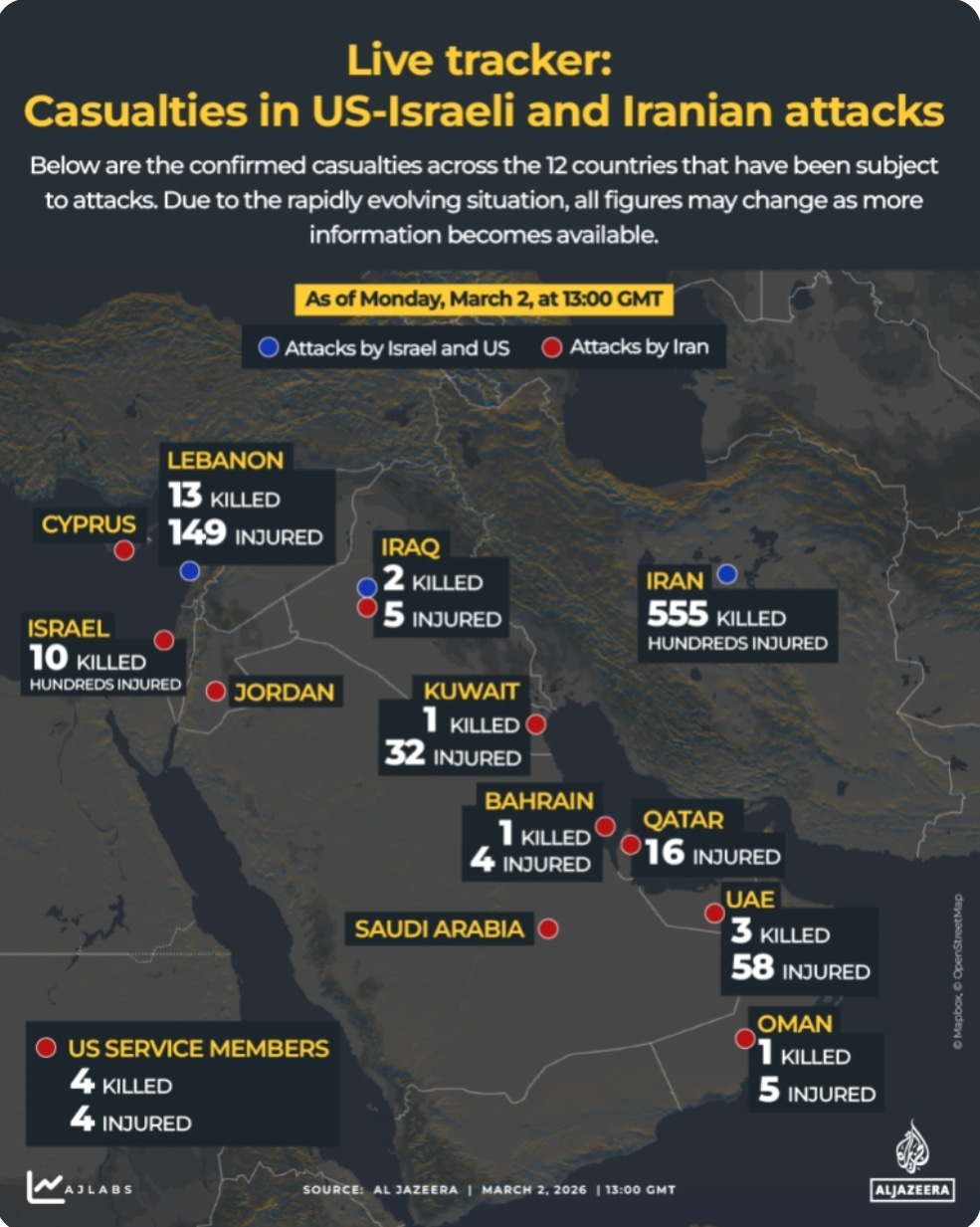
You've seen the footage, read the headlines, watched the reactions pour in across your feed. And if you're like me, something in you has been unsettled — not just by the violence itself, but by the response of people you love and worship alongside. The cheering. The certainty. The scripture verses offered as justification for what is, by any honest measure, the death of thousands of people made in God's image.
I've been sitting with this for weeks, long before the recent events. Sitting with a desperate, grief-soaked question I can't shake loose.
Don't you see?
I want to be careful here because I'm not writing to condemn anyone. I'm writing to people I love, people I sit next to in church, people whose genuine faith I don't doubt for a moment. I'm writing because I believe we are capable of genuine faithfulness, and something has gotten in the way.
Something has hardened.
Think about what it means to watch Christians celebrate the death of enemies. Not reluctantly acknowledge the tragedy of necessary conflict — celebrate. Post the explosion footage. Count it as victory. Offer theological justification for why these particular deaths serve God's purposes. Then consider what we actually confess: God takes no pleasure in the death of the wicked (Ezekiel 33:11). He does not. It is stated plainly. And yet somewhere between the prophet and the present, we've decided that we do.
How did we get here?
Blessed are the meek. Blessed are the merciful. Blessed are the peacemakers. (Matthew 5:5-9)
Love your enemies and pray for those who persecute you, (Matthew 5:44)
Bless those who persecute you; bless and do not curse. (Romans 12:14)
Do not repay anyone evil for evil. (Romans 12:17)
If your enemy is hungry, feed him; if he is thirsty, give him something to drink. (Romans 12:20)
Do not be overcome by evil, but overcome evil with good. (Romans 12:21)
Our struggle is not against flesh and blood, but against the rulers, against the authorities, against the powers of this dark world. (Ephesians 6:12)
Whoever does not love their brother and sister, whom they have seen, cannot love God, whom they have not seen. (1 John 4:20)
Even sinners love those who love them. What credit is that to you? (Luke 6:33)
And look at what we've done with it.
He said blessed are the meek — we've turned meekness into deterrence. He said blessed are the peacemakers — we've turned peacemaking into wielding power. He said do not be afraid more than perhaps anything else — we've turned that fearlessness into preemptive strikes. He said love your enemies — we've decided some enemies don't qualify. He said our struggle is not against flesh and blood — we're killing flesh and blood and calling it spiritual warfare.
He silently carried a cross and told us to carry ours. Instead, we send others to their death and tell ourselves that's our burden to bear.
Jesus said he came not to condemn the world but to save it (John 3:17). We've apparently decided to pick up where he left off and condemn those he refused to. The servant is not greater than the master (John 13:16) — and yet we avoid the suffering he walked directly into and bless the weapons he refused to lift.
These are not small inversions. These are reversals of the very thing that makes us followers of Christ.
I know what some will say. What about protecting the innocent? What about evil that must be stopped? These are real questions and I hold them honestly — I don't have clean answers. But that's not who this article is for. This article is for those that have no serious wrestling, no anguished discernment, no grief over the cost. Just certainty. Just celebration. Just the theological scaffolding constructed to make the thing we already wanted to do feel like faithfulness.
That's not the hard question honestly held. That's the hard heart finding verses.
A hard heart doesn't announce itself. It's compatible with genuine worship, real generosity, authentic love for family and community. The Pharisees were devout, serious men who believed they were honoring God. Jesus grieved over their inability to recognize and turn towards the truth when it arrived. Their system had become more real to them than the living God standing in front of them.
Don't you see?
Can you feel the weight of an Iranian child buried under rubble? Not as a theological problem to be categorized. Not as unfortunate collateral in a prophetic timeline. As a child. Made in the image of God. Whose death God does not celebrate, whatever we may feel about the government that ruled over her.
If your framework has made that child invisible or acceptable — something has gone wrong at the root. Not in your politics. In your heart.
I know what it feels like to be certain, to have the enemies clearly identified. I lived there. And I was not at peace. The fruit of it was anger and exhaustion and a growing numbness to everything outside my circle.
The fruit doesn't lie (Matthew 7:16). If your eschatology produces anxiety about geopolitical outcomes rather than the peace that passes understanding (Philippians 4:7), something is wrong at the root. If your framework makes the death of enemies feel like victory rather than tragedy, something has been reversed. If protecting your flock has come to mean harming other flocks — people equally loved by the Shepherd who said he had sheep from other folds (John 10:16) — then we have wandered very far from home.
On Saturday I wondered where God was in all this. In the war and injustice and hard hearts. But I was reminded:
The Lord is not slow in keeping his promise, as some understand slowness. He is patient — not wanting anyone to perish, but everyone to come to repentance (2 Peter 3:9)
Everyone. The Iranian government official. The Palestinian militant. The American soldier. The evangelical pastor blessing the bombs. Every single one — wanted home, waited for, held open for.
That patience is not weakness. It is the most staggering love imaginable. And it is the model we've been given — not to be overcome by evil, but to overcome evil with good. To absorb the cost of keeping the door open. To love past the point where love makes strategic sense.
But the patience of God is not the same as his silence. There is a call embedded in that patience, the same call it has always been.
Repent.
Not as condemnation. As mercy. As the God who takes no pleasure in death saying — turn. There is still time. The door is open. Come home to what you actually believe, to the Christ you actually confess, to the pattern of love that absorbed the world's violence and on the third day proved it was stronger than all of it.
War sucks on all sides. There is no righteous war. And pacifism is often peace through weakness, ending in slavery and more death. The world system is death, and there's no fixing it. The least of two evils is still evil.
You're asking the right questions, noticing the right horrors.